
Posted on November 1, 2026 by Anastasia Cisneros-Lunsford
From concert halls to classrooms, Regents' Outstanding Teaching Award recipient Rita Mitra draws on her musical background to inspire critical thinking, creativity and student success.
For years, Rita Mitra stepped into the spotlight of dimly lit concert halls, where success depended on countless hours of practice, the ability to adapt to the unexpected and resilience to perform under pressure. Today, the stage has been replaced by a cybersecurity classroom in the UT San Antonio College of AI, Cyber and Computing, where Mitra helps students develop those same skills as they prepare for careers in technology.
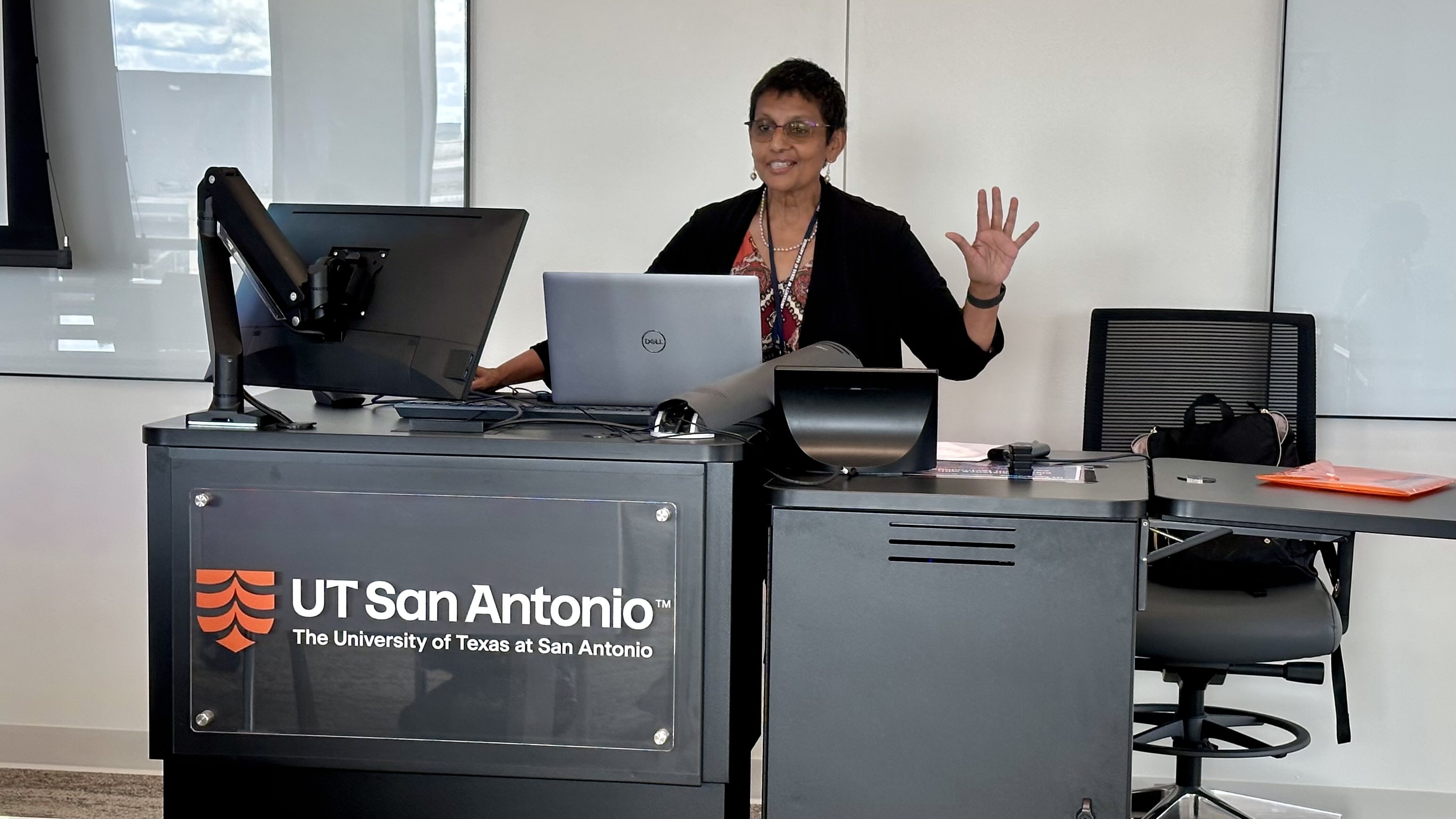 For Mitra, the journey from concert halls to lecture halls was never about leaving one profession behind for another. Instead, she brought her principles of performance into her teaching.
Recognized for her distinguished teaching and innovation in the classroom, Mitra was among the 2026 recipients of The University of Texas System Regents’ Outstanding Teaching Award, which honors faculty who have made a lasting impact on student learning.
From musician to cybersecurity educator
A Juilliard graduate, Mitra was a classical pianist, violinist and educator for 20 years. She brings the mindset that guided her years as a musician into her role as assistant department chair and professor of practice in the Department of Information Systems and Cybersecurity.
“Teaching requires rigorous preparation and practice, with real-time pivoting and improvisation to meet students in the current moment,” Mitra said. “Living this duality is essential to our practice in many fields, including cybersecurity and music.”
She teaches courses in cybersecurity, artificial intelligence, and other emerging technologies, preparing students for careers in a rapidly evolving field.
Mitra encourages her students to embrace ambiguity and develop the confidence to solve problems that do not always have clear answers.
“Our role as teachers is to give students a clear structure, hands-on practice, customized options, iterative feedback and post-graduate mentorship,” Mitra said. “As teachers, we help students grow by intentionally leaving unknowns for them to troubleshoot, explore, collaborate, reflect and try again.”
Preparing students for the AI era
As artificial intelligence reshapes industries and workplaces, Mitra believes educators must teach students to think critically about how these tools are used.
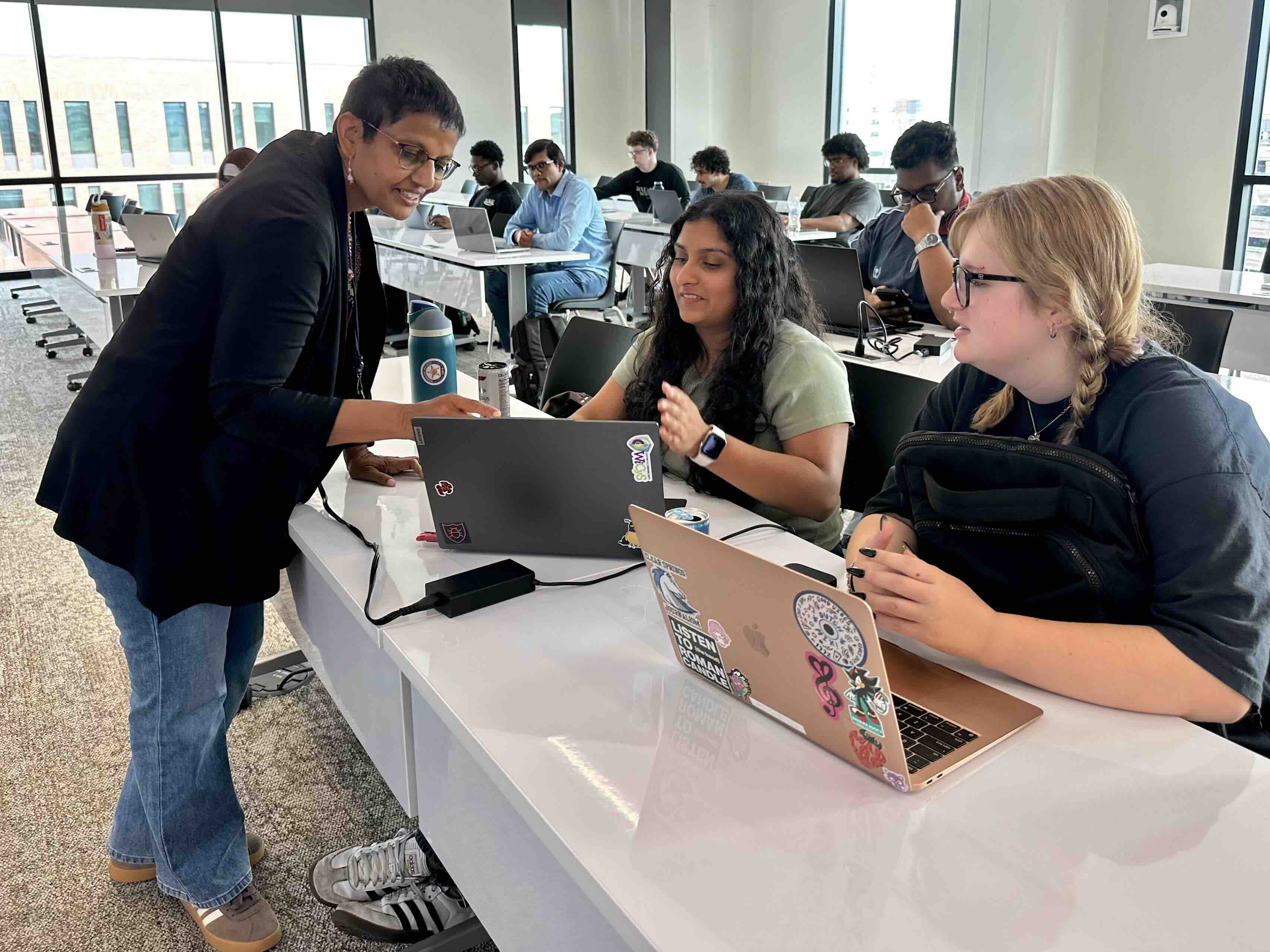 “Ten years ago, we taught students how to search for information. Now we must teach them to prioritize the evaluation of information for accuracy and reliability,” she said. “We must guide students on how to engage with artificial intelligence ethically and responsibly, as a thinking partner that inspires more creative thought, not as a replacement for thought.”
Mitra also emphasizes the importance of preparing students to address issues of data accuracy, privacy, bias, transparency and accountability as they become leaders in an AI-driven world.
Student impact
Mitra measures success in the growth she sees in students each day. Sara McDonald, a 2024 cybersecurity graduate, enrolled in the online program expecting “to get through college as an employment checkmark.” But that changed after meeting Mitra.
“Realizing how much of an impact Dr. Mitra had on my journey, I am inspired to model the same selfless service in my professional life,” said McDonald, a cyber defense incident responder supporting clients through her work with SandTech Solutions. “When doing school 100% online, it can be difficult to develop a sense of community with peers, and (students) can feel isolated from the support they need to excel academically. Dr. Mitra bridges this gap by creating spaces for her students to collaborate in, ask questions and reinforce their own learning by helping others.”
During her time at UT San Antonio, McDonald served as a tutor, vice president of the Online Cyber Security Alliance and an intern in the first Student AI Partnership pilot. Mitra said McDonald’s documentation of her work on a GitHub Copilot course was so thorough that she turned it into a lab for a semester.
“Sara documented her work so beautifully that it reshaped how I think about student portfolios,” Mitra said.
Mitra’s approach to teaching
Mitra’s experiences as a musician, software developer and cybersecurity educator have shaped her approach to teaching.
“Students are co-authors of their craft, not merely consumers, and they are asked to perform, explain and reflect rather than only to recall,” Mitra said.
The audience may have changed, but Mitra continues to bring the same dedication, creativity and adaptability that defined her musical career to the classroom.
— Anastasia Cisneros-Lunsford
