
Posted on November 4, 2026 by Anastasia Cisneros-Lunsford
Professor Sushil Prasad is helping modernize introductory computer science education with new teaching tools that reflect today's computing technologies.
Computer science has changed dramatically over the past two decades. Many introductory courses, however, have not.
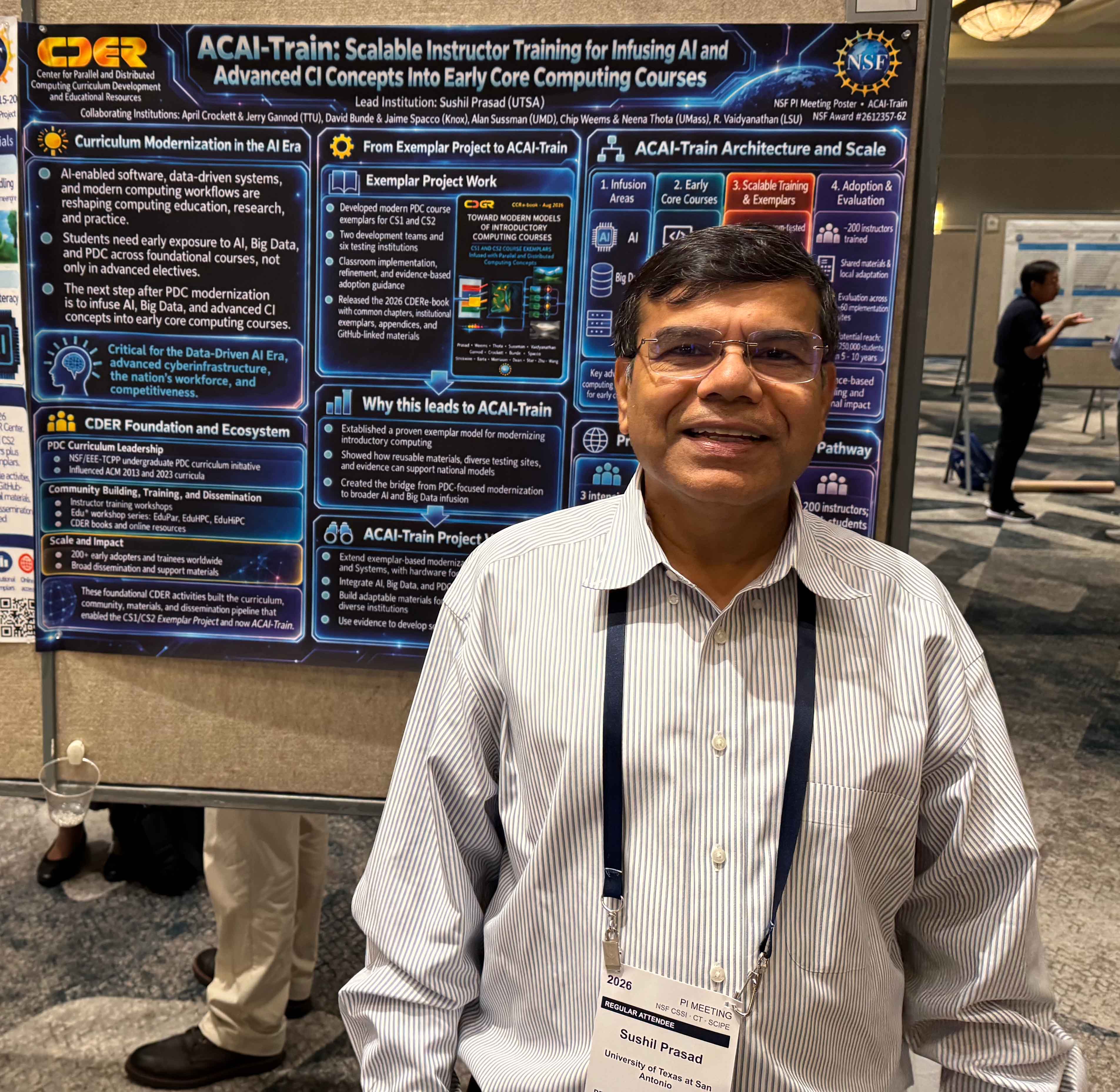 A new e-book, led by UT San Antonio College of AI, Cyber and Computing Professor Sushil Prasad, PhD, offers a roadmap for introducing modern computing concepts into the classroom while preserving the fundamentals students need to succeed.
Supported by a $1 million National Science Foundation (NSF) grant awarded in 2023, the project culminated in a new e-book, “Toward Modern Models of Introductory Computing Courses: CS1 and CS2 Course Exemplars Infused with Parallel and Distributed Computing Concepts.”
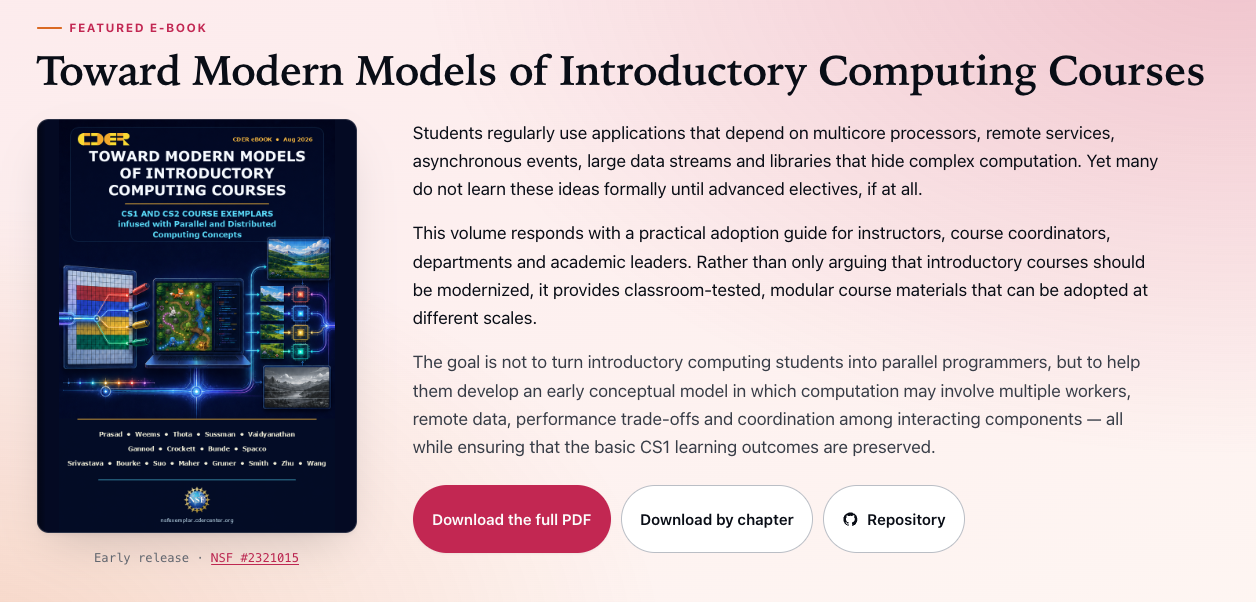
Published by the Center for Parallel and Distributed Computing Curriculum Development and Educational Resources (CDER), the e-book provides instructors with hands-on activities, visual exercises, labs and real-world examples along with instructional material to help modernize introductory computer science courses.
Developed and tested across multiple partnering institutions, the project provided educators with practical tools to align introductory computing courses more closely with the technologies and systems students will encounter in advanced study and the workforce.
“The simplest way to describe the project is that we are updating the first two computing courses so that the model of computation students learn reflects how computing actually works today,” Prasad said.
Why introductory courses need updating
Traditional introductory computer science courses, commonly known as CS1 and CS2, primarily teach students how computers process tasks one at a time. Modern computing doesn’t work that way, Prasad explained. It relies on multicore processors, cloud services, remote data, application programming interfaces (APIs) and distributed systems. APIs allow different software systems to communicate and exchange information.
“Our goal was not to replace the foundations of problem solving and programming; it was to teach those foundations in a more current context,” he said. “For example, students can learn loops and arrays while considering how work might be divided among multiple processors, learn objects through event-driven programs, or work with remote data while learning functions and APIs.”
Through the project, students still learn the essential CS1 and CS2 material, but they also begin developing a more accurate mental model of contemporary computing, Prasad said.
While many introductory courses still teach computing as a series of tasks processed one at a time, today's technologies like artificial intelligence, cloud services, cybersecurity and scientific computing all depend on multiple systems working together, making it increasingly important for students to encounter these concepts early in their education.
Building and testing the models
Across a variety of institutional settings and programming languages, the project's leadership and editorial team included faculty from UT San Antonio, University of Massachusetts Amherst, University of Maryland, College Park and Louisiana State University.
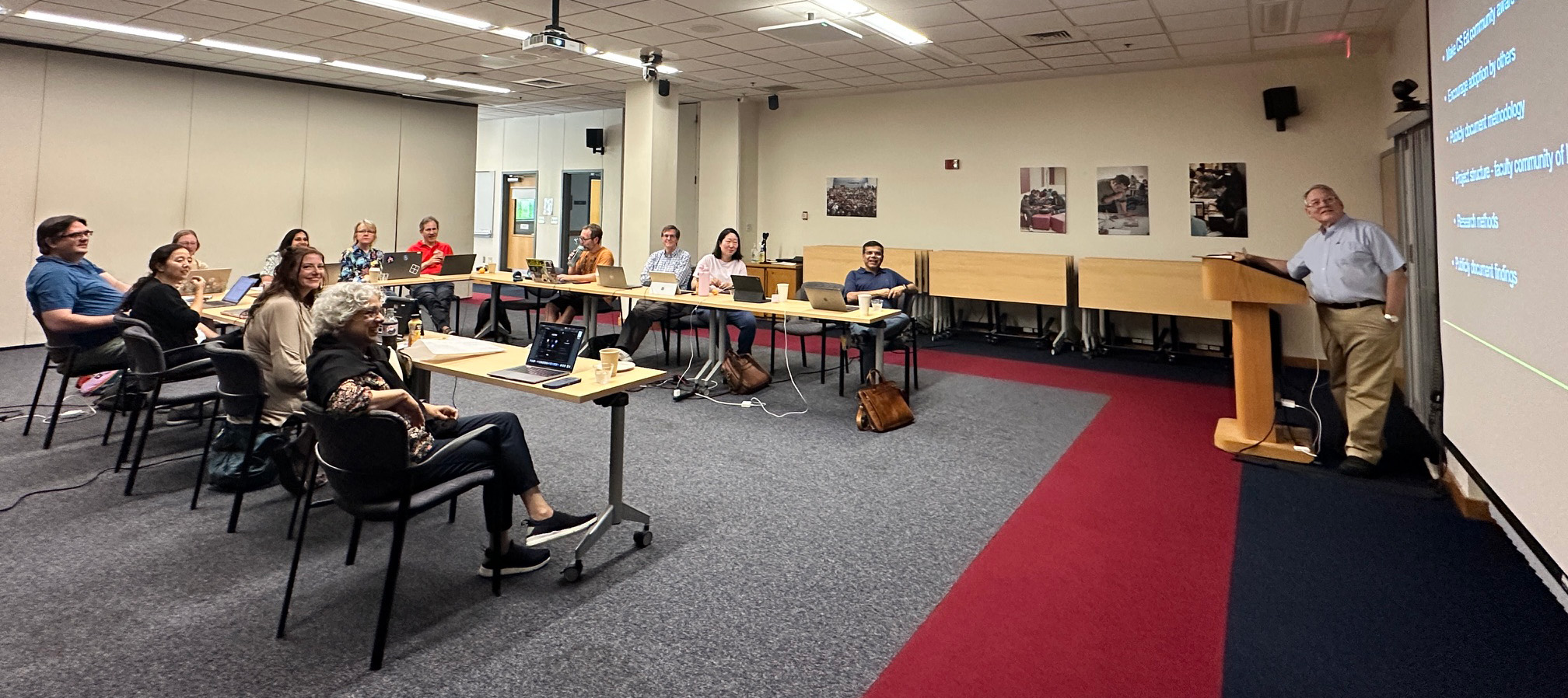 Development teams at Tennessee Technological University and Knox College created the original course materials, which were later adapted and tested by these partner institutions: University of Southern Indiana, University of Nebraska-Lincoln, Webster University, Casper College, Hawai'i Pacific University, and Montclair State University.
“The testing teams were not asked simply to reproduce the original courses,” Prasad said. “They decided what would work in their own settings, changed activities, selected different insertion points and sometimes developed new approaches.”
Prasad explained that institutions experimented with animations, APIs, gaming, image processing, physical computing and low-code activities. The resulting e-book presents several pathways for adoption rather than a one-size-fits-all approach.
NSF has also awarded the project team another $1 million to expand the model and include AI and Big Data concepts, with plans to train approximately 200 instructors and support implementations at about 60 institutions.
“AI will be both a subject of study and a teaching tool,” Prasad said. “Students should learn how to use AI-generated code, but they must also learn how to read it, test it, identify errors, repair it, integrate it with other software and judge whether its output is trustworthy.”
— Anastasia Cisneros-Lunsford
