Posted on September 17, 2026 by Anastasia Cisneros-Lunsford
UT San Antonio students gained hands-on experience building AI agents during a full-day NVIDIA Deep Learning Institute workshop at San Pedro II.
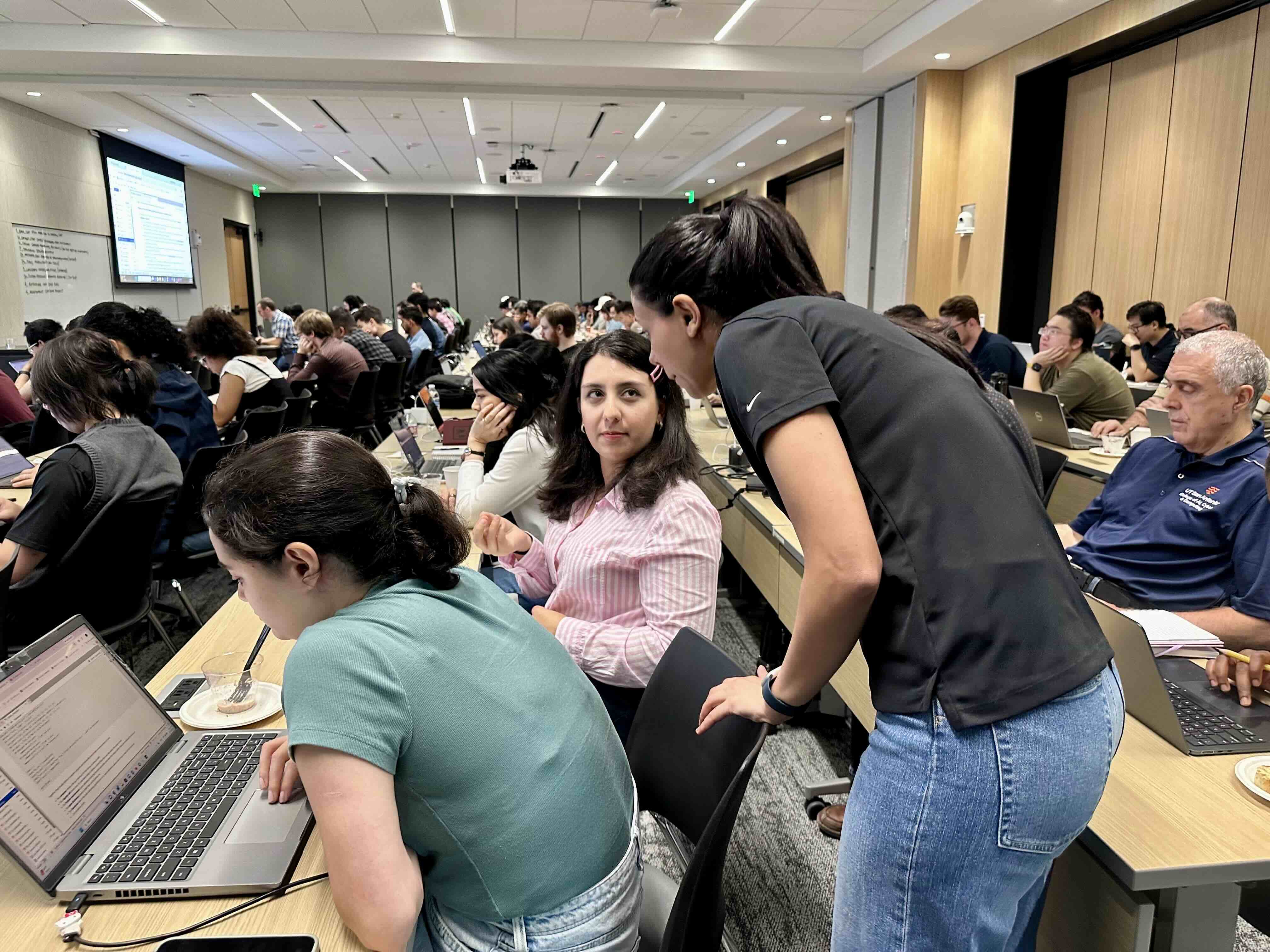 On Sept. 17, about 100 UT San Antonio students moved beyond using AI as a tool and began developing the technical foundation to conduct research on agentic AI. Through hands-on development, they learned how autonomous systems reason, use tools and take actions, preparing them to investigate how these systems can operate safely, securely and reliably in real-world environments.
Through its Deep Learning Institute, NVIDIA, a global technology company known for developing advanced computer chips and systems that power AI, partnered with the College of AI, Cyber and Computing to host a full-day workshop on “Building Agentic AI Applications with LLMs” at the Valero Engagement Center in San Pedro II. The hands-on training introduced students to agentic AI.
Agentic AI refers to artificial intelligence systems designed to pursue a goal by planning and carrying out tasks, using available tools and information and adjusting their actions with limited human direction.
Paul Rad, the college’s associate dean for research and partnerships, said the workshop was organized to expand the college’s capacity for research on agentic AI, with particular attention to the safety and security of systems that may operate across businesses, public institutions and government agencies.
“Agentic AI marks a shift from systems that generate content to systems that reason, use tools and act in real-world environments,” Rad said. “This workshop gives our students and researchers the foundation to study agentic AI and make these systems safe, secure, reliable and accountable for organizations and public agencies. By building an agent and earning an NVIDIA credential, participants gain the practical skills needed to advance responsible research and prepare for internships and careers.”
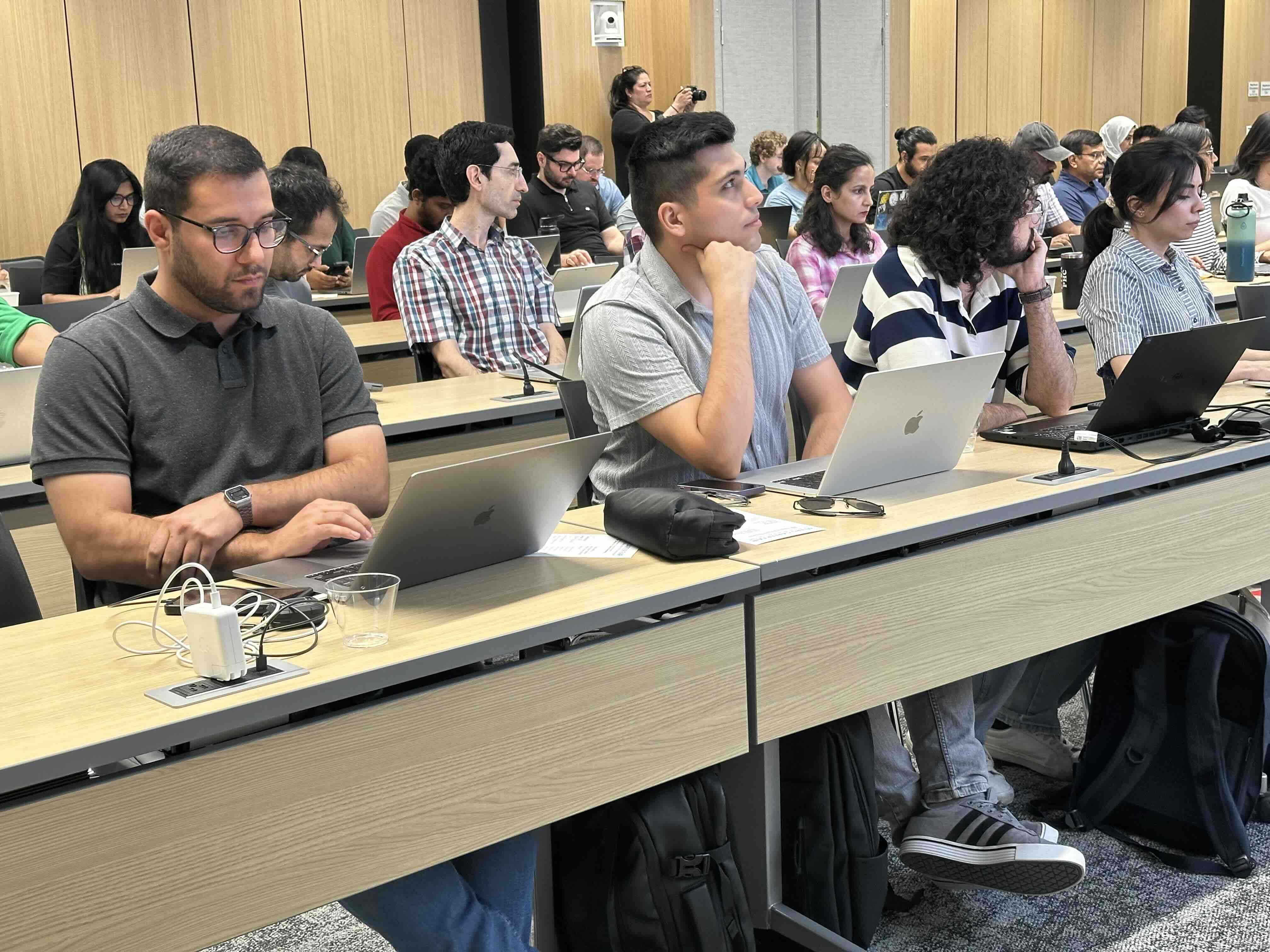 During the eight-hour workshop, students explored the components that allow an AI agent to complete a task. Topics included reasoning loops, memory and breaking large tasks into smaller steps. Participants also explored tools used to build agents, such as CrewAI and LangGraph.
By the end of the workshop, students applied those concepts to build a simple agent that could break down a question, gather information and synthesize the results.
— Anastasia Cisneros-Lunsford